Classroom Auction Ideas: How to Host One Without Losing Your Mind
Classroom Auction Ideas: How to Host One Without Losing Your Mind
Let's be honest — the moment you announce a classroom auction, the energy in your room shifts completely. Students start counting their money, planning their bids, and suddenly everyone is very motivated to earn more classroom cash.
That's the magic of a classroom auction.
But if you've never hosted one before, it can feel overwhelming — especially if you're still getting your classroom economy off the ground. The good news? With clear expectations and intentional planning, a classroom auction can run smoothly, stay educational, and become one of your students' favorite days of the year.
Here's exactly how I host successful classroom auctions in middle school — without losing instructional time or my sanity.
1. Start With Clear Rules and Expectations
Before anything else, students need to understand how the auction works.
Set expectations around:
- How students earn classroom money
- What items will be auctioned
- How bidding works
- What happens when money runs out
Clear rules prevent confusion and keep the auction fair. This is especially important when auctions are part of a larger classroom economy system where consistency and accountability are the foundation. If you're still building that foundation, start with how to implement a classroom economy in middle school in 5 steps.
2. Plan the Auction With Intention
A successful classroom auction doesn't happen at the last minute — it's planned.
Start by deciding the purpose of the auction, the types of items you want to include, and how much classroom currency students can spend.
I've found it works best to schedule auctions during non-instructional time — like Advisory periods or after state testing. Two 30-minute Advisory periods are my sweet spot, so the auction never cuts into core learning time.
You can also get creative with sourcing items:
-
Ask colleagues for leftover supplies
-
Invite families to donate simple items
-
Check with your campus for extra materials
Having a clear plan keeps the auction fun — not frantic. And if you want to avoid the common planning mistakes that can derail the whole system, here are 5 classroom economy mistakes I made and what I'd do differently.
3. Encourage Student Involvement
Student buy-in makes all the difference.
I involve students by letting them suggest auction items, allowing them to decorate auction materials, and assigning student roles like banker or auction helper. When students help plan and prepare, they feel ownership — and engagement skyrockets.
This kind of involvement pairs perfectly with structured classroom jobs. When students already have defined roles in your classroom economy, plugging them into auction day feels natural. Check out these classroom jobs ideas for middle school students for roles that work great during big events like this.
4. Select Items Students Actually Want
Let's be honest, middle schoolers are picky.
The best auction items don't have to be expensive, but they do need to be desirable. Some of my most successful auction items included:
- Mystery bags made from leftover snacks or supplies
- Decorated bags, students couldn't see inside
- Small items from Five Below or Dollar Tree
- School supplies and simple privileges
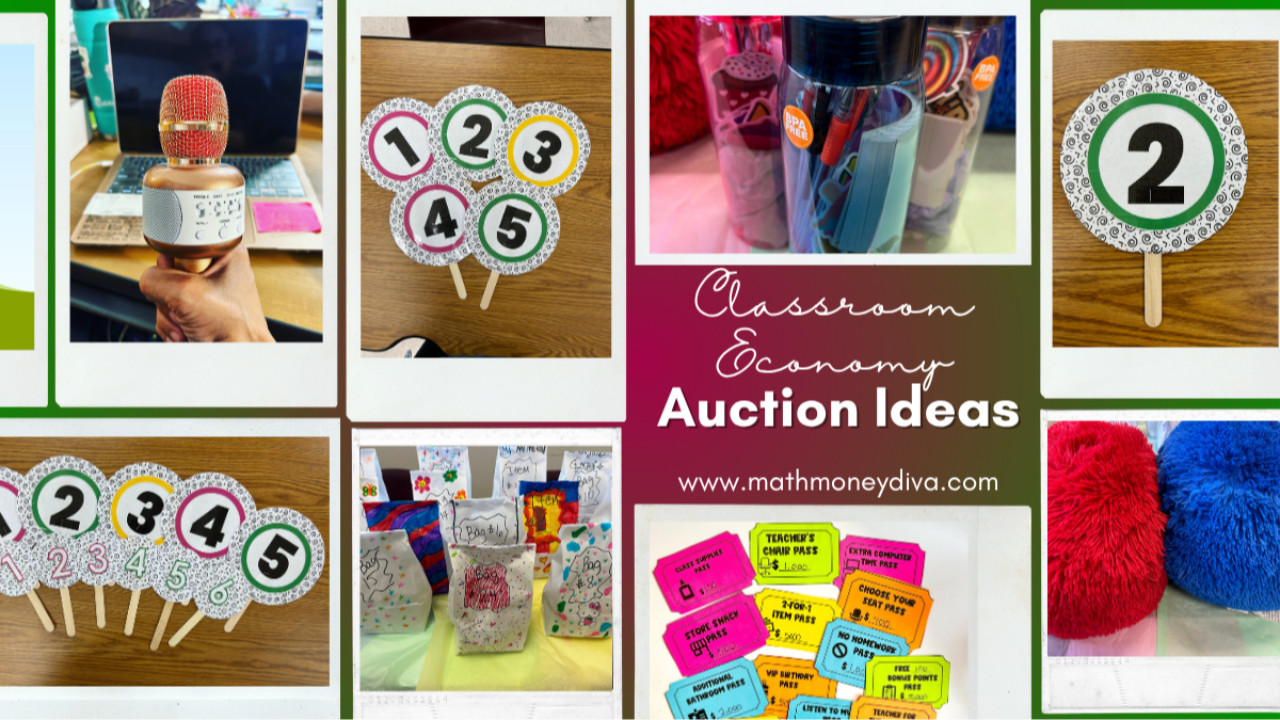
Here's one of my favorite tricks: I had students decorate plain white paper bags for 10 minutes, then filled them later so they couldn't peek inside. Those mystery bags created the most excitement of any item I've ever auctioned.
Choosing items based on student interest keeps bidding competitive, fun, and something students talk about long after it's over.

5. Set Up a Clear Auction and Payment Process
Organization is everything on auction day.
To prepare:
- Display items clearly with posted starting bids
- Assign a student banker
- Distribute bidding paddles
I created a private Google Site that shows all auction items so students can preview them ahead of time and plan their bids strategically. That alone significantly cuts down on chaos.
Before bidding starts, review how to raise paddles, when to stop bidding, and how payment works. For payment, students count their money, the student banker confirms amounts, and item exchanges are completed with receipts.
Clear systems reinforce accountability — one of the biggest benefits of running a classroom economy in the first place.
And if you want to make auction day even smoother, my Classroom Auction Large Signs set has everything you need to display items professionally and keep bidding organized — grab it on TPT and have it ready before your next auction day.
When a Full Auction Feels Like Too Much
Classroom auctions are powerful — but they aren't required for every classroom.
If managing auctions, banking, and tracking all at once feels like too many moving parts, Classroom Cash is a simplified alternative that still rewards participation, effort, and responsibility — without the large-scale event planning.
Grab the free Classroom Cash starter kit and see if it's the right fit for your classroom before you commit to a full economy system.
Final Thought
A classroom auction should feel exciting — not stressful.
With clear expectations, planning, and student involvement, auctions reinforce life skills, responsibility, and community while keeping learning front and center.
You've got this. Now go make it rain classroom cash. 💸

Don't miss a beat!
For more education tips and valuable information on classroom economy and math teaching resources, join our community!
We hate SPAM. We will never sell your information, for any reason.
Hey Teacher Friend!

