Classroom Jobs for Middle School Students: Ideas, Routines, and Pay Structures
Middle school classrooms can feel chaotic without the right systems in place. If you're looking for a way to engage your students, reduce daily stress, and build responsibility without adding more to your plate, classroom jobs might be exactly what you need.
When done right, classroom jobs give students ownership of the space while helping you manage routines more efficiently. The key is keeping jobs simple, purposeful, and supported by clear expectations.
Here's how I use classroom jobs in my middle school classroom — and what actually makes them work.
Why Classroom Jobs Work in Middle School
Middle school students want responsibility, even when they don't always show it.
When students have defined roles:
- They feel trusted
- They take more ownership
- Classroom routines run smoother
Classroom jobs also support accountability when paired with a larger system. If you're thinking about building out a full system, check out how to implement a classroom economy in middle school for a step-by-step breakdown.
How Many Classroom Jobs Should You Have?
There's no magic number here — and that's actually good news.
You can assign one job per student, have multiple students share responsibilities, or rotate jobs throughout the year. What matters most is that every job is small, clear, and doable.
Here's the truth: assigning too many jobs too quickly is one of the most common mistakes teachers make when starting this system. Starting simple makes everything easier to manage and more effective long-term. I break down more of those early mistakes in 5 Classroom Economy Mistakes I Made — and What I'd Do Differently.
Examples of Classroom Jobs for Middle School Students
Here are classroom jobs that support daily routines without overwhelming students or teachers:
- Classroom Librarian — organizes books and manages checkouts
- Tech Support — helps with devices and troubleshooting
- Group Speaker — summarizes group discussions or solutions
- Classroom Monitor — checks that materials are returned properly
- Classroom Greeter — welcomes guests and substitutes
- Attendance Monitor — assists with attendance routines
- Anchor Chart Clerk — updates visuals and classroom displays
- Class News Reporter — highlights class activities or wins
- Banker — manages classroom economy records
- Clean-Up Monitor — ensures the room is ready for the next class
Jobs like these work best when expectations are visible and reinforced consistently.
Matching Jobs to Classroom Needs and Student Strengths
When assigning jobs, consider three things: classroom needs, student interests, and skill development.
A student who enjoys art might thrive as an Anchor Chart Clerk. A natural leader might do best as a Group Speaker or Banker. When students feel like their job actually fits them, they show up for it differently.
Rotating jobs throughout the year keeps students engaged and prevents the "I'm bored of this" burnout that can creep in around semester two.

Why Classroom Routines Make or Break Your Job System
Here's something teachers don't always realize until it's too late — classroom jobs fall apart without routines.
Clear routines reduce confusion, save instructional time, and help students feel confident in their roles. When students know exactly when and how to complete their jobs, they don't need constant reminders.
One of the best tools for making this work? Consistent agenda slides. When students know what's happening the moment they walk in, the whole system runs more smoothly. Here's how agenda slides create structure in a middle school math classroom.
Determining the Value of Each Classroom Job
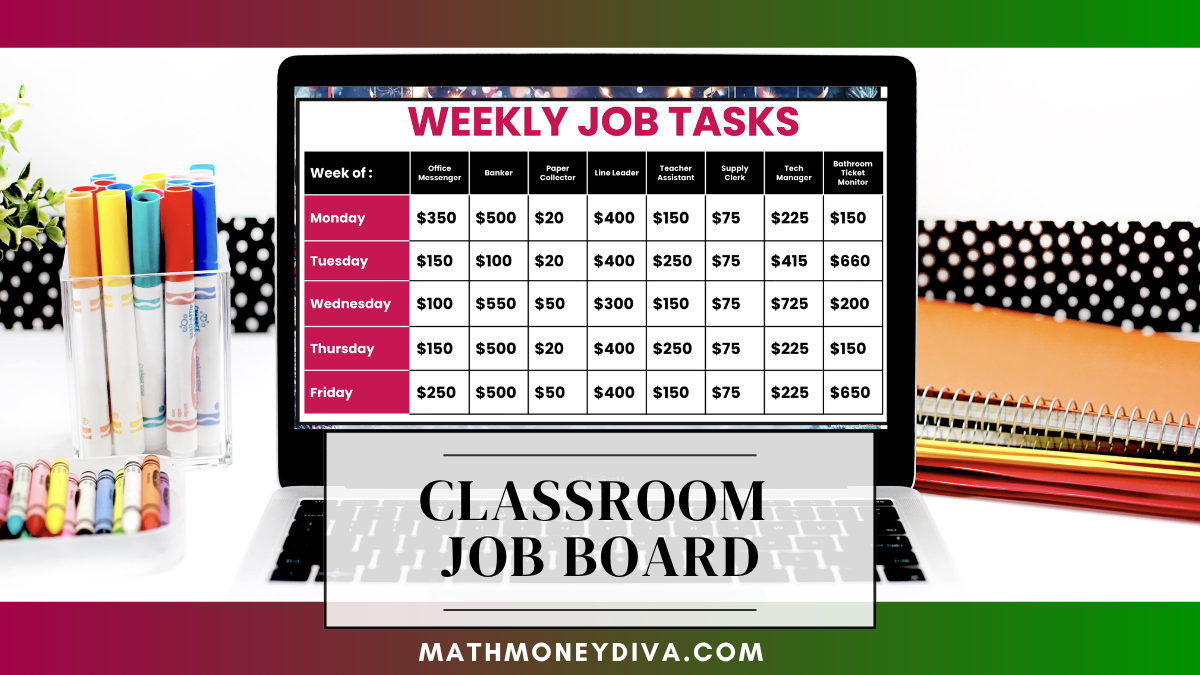
Not all jobs carry the same level of responsibility — and your pay structure should reflect that.
When assigning value, consider the time and effort required, the skill level needed, and how important the role is to daily classroom operations. Jobs like Banker or Tech Support that require daily responsibility or higher-level skills may earn more than simpler roles.
This creates a fair, balanced system where students feel their contributions actually matter. Pairing jobs with student reflection and discussion also strengthens performance — and if you want more ideas for building that kind of ownership, math choice boards are a great way to give students structured independence.
A Simpler Option: Classroom Cash
A full classroom economy works well for many teachers — but it's not the only option.
If you want fewer moving parts, less tracking, and quicker implementation, Classroom Cash is a simplified system that focuses on participation, effort, and responsibility without managing every detail of a full economy.
It works especially well for teachers who want structure without overwhelm, or for classes that need clear, consistent incentives. Grab the free Classroom Economy Starter Kit to see how it works before you commit.
Final Thought
Classroom jobs aren't just about helping the teacher — they're about building responsibility, independence, and ownership in your students.
When paired with strong routines and a clear system, classroom jobs can completely transform how your middle school classroom runs.
Start simple. Stay consistent. Adjust as needed.
You've got this.

Don't miss a beat!
For more education tips and valuable information on classroom economy and math teaching resources, join our community!
We hate SPAM. We will never sell your information, for any reason.
Hey Teacher Friend!

