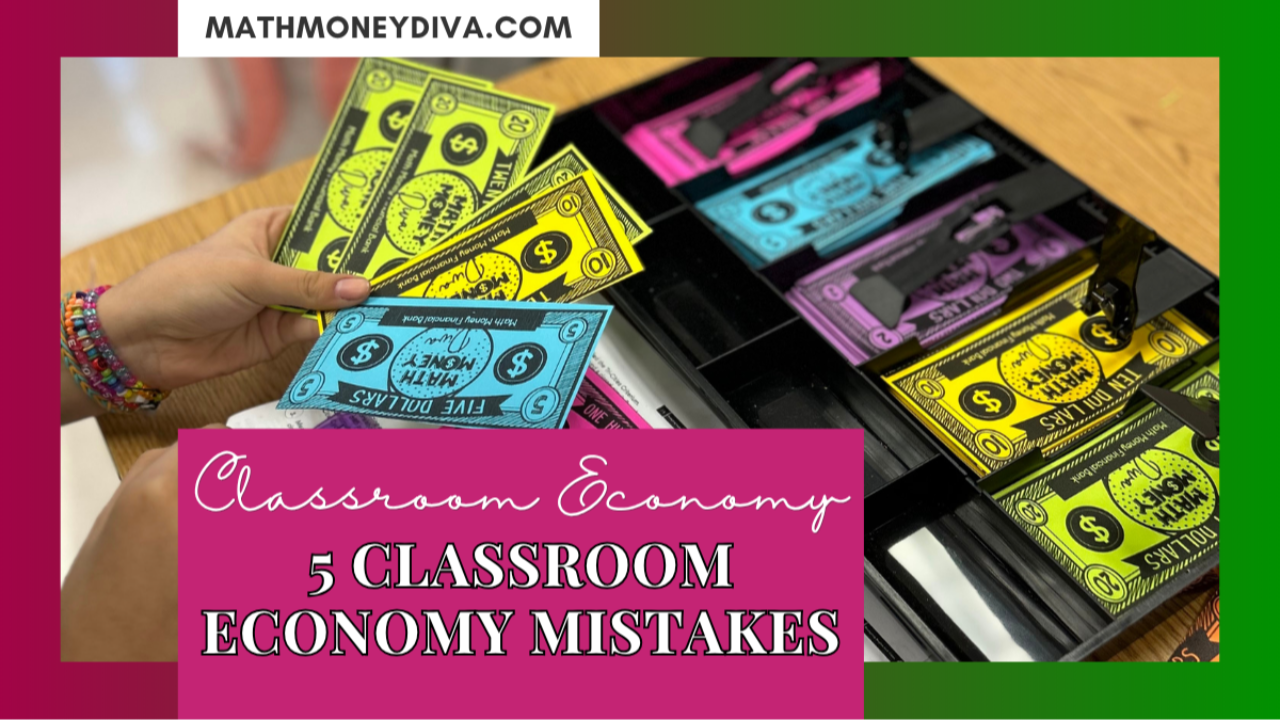
5 Classroom Economy Mistakes I Made and What I’d Do Differently
When I first decided to implement a classroom economy, I had the best intentions.
I wanted more engagement.
Better behavior.
Less constant reminding and redirecting.
What I learned quickly was this:
Good intentions don’t automatically create a good system.
Like many teachers, I learned through trial and error. I made mistakes—some small, some overwhelming—but each one taught me something important about how to make a classroom economy actually work.
If you’re thinking about starting a classroom economy (or fixing one that feels exhausting), here are the biggest mistakes I made—and the lessons that changed everything.
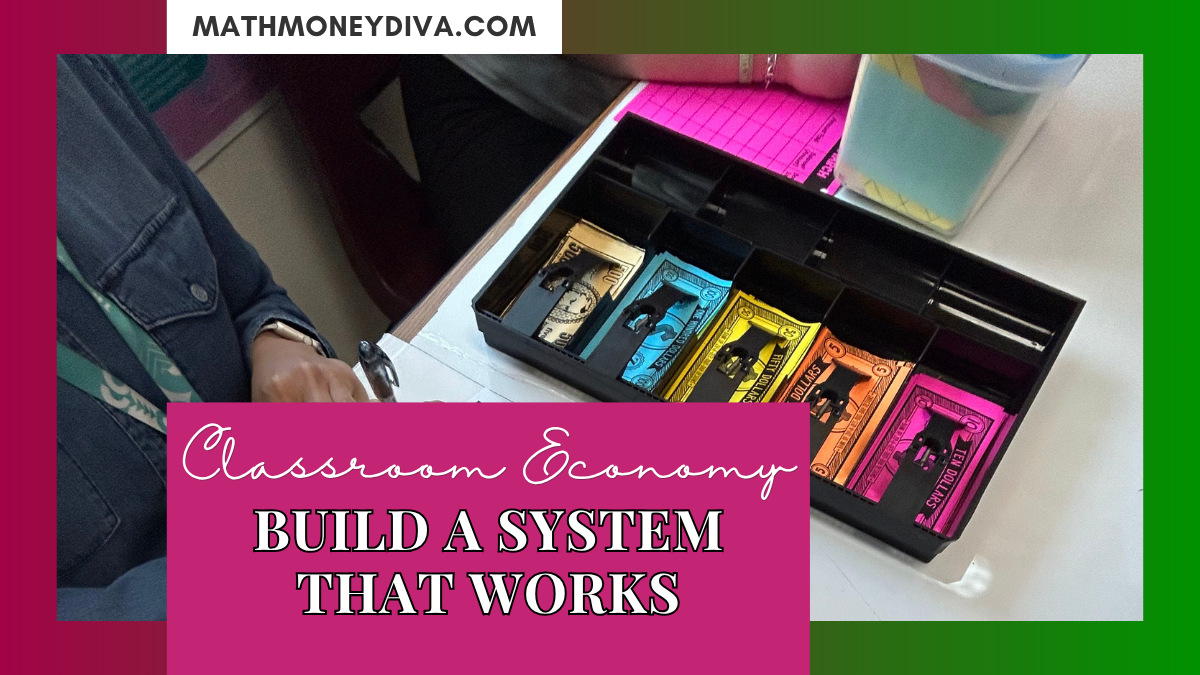
1. Overcomplicating the System From Day One
One of my biggest mistakes was trying to run a full-scale classroom economy immediately.
I created:
-
too many classroom jobs
-
detailed pay scales
-
bonuses and fines for nearly everything
Instead of helping, the system became overwhelming—for my students and for me. I spent more time managing the economy than teaching.
Lesson Learned
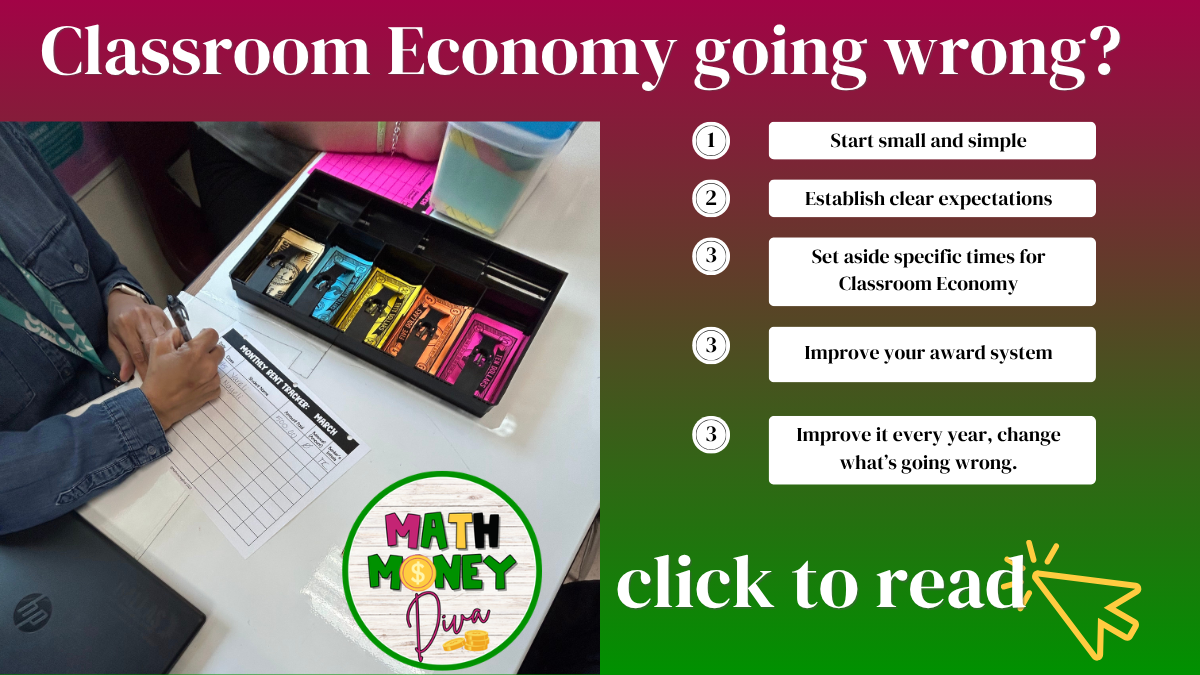
Start small and simple.
Middle school students don’t need every feature on day one. Too much structure too fast can be just as confusing as no structure at all.
At one point, I assigned my 6th graders 30 different classroom jobs. It was far too much to manage. Now, I begin the year with about 15 essential jobs—assistant teacher, banker, materials manager—and add more only when students are ready.
2. Not Setting Clear Expectations and Consequences
Another mistake was assuming students would “figure it out” as we went.
I didn’t spend enough time explicitly teaching:
how the economy worked
what each job required
what happened if responsibilities weren’t met
That led to confusion, inconsistency, and frustration—for everyone.
Lesson Learned
A classroom economy needs clear expectations and visible accountability.
Now, I dedicate time to explicitly teaching the system. I use a dedicated classroom space for:
-
economy rules
-
job responsibilities
-
expectations and consequences
I also treat classroom jobs like real responsibilities. Students go through a training period, and I even hold mini-interviews for certain roles. That investment makes a huge difference in ownership.
3. Letting Time Management Get Out of Hand
At first, I tried to squeeze the classroom economy into leftover time.
Big mistake.
Paydays, job rotations, and tracking earnings started eating into instructional time. I felt rushed, and students often had unfinished work by the end of the week.
Lesson Learned
The classroom economy must be intentionally scheduled, not squeezed in.
Now, I:
-
set aside specific times for job rotations and paydays
-
handle updates during a weekly reflection or wrap-up
-
use digital tools to speed up calculations
Instead of updating balances daily, I switched to a monthly system, which is far more manageable and still effective.
4. Assuming One-Size-Fits-All Rewards Would Motivate Everyone
Early on, my classroom store looked like many others: pencils, stickers, candy.
Some students were excited.
Others… not at all.
Engagement dropped because the rewards didn’t match student interests.
Lesson Learned
Motivation isn’t one-size-fits-all.
Now I use a mix of:
-
tangible rewards
-
privileges
-
experience-based incentives
Things like sitting by a friend, extra tech time, lunch with the teacher, or special classroom privileges often matter more than physical items.
Variety keeps the economy engaging for all students.
5. Not Adjusting the System as the Year Went On
I made the mistake of keeping the economy the same all year.
As students grew and routines changed, the system started to feel stale—and less effective.
Lesson Learned
A classroom economy should evolve.
Now, I regularly reflect and adjust:
-
adding or changing jobs
-
tweaking pay structures
-
responding to classroom needs
Checking in with students helps me see what’s working and what needs to change. Flexibility keeps the system meaningful.
Ready to Build a System That Actually Works?
If you want to skip the trial and error and launch a classroom economy the right way from the start, here's everything you need:
- Free Classroom Economy Starter Kit — grab this first to see how the system works before you commit
- Classroom Cash Made Easy — the complete step-by-step walkthrough for building a simplified classroom economy that's sustainable all year
- Classroom Economy Banking Bundle on TPT — bills, banking system, and classroom store components ready to go
Final Thought
A classroom economy can absolutely improve engagement, responsibility, and classroom culture—but only if it’s built to support both students and teachers.
If the system feels overwhelming, it’s okay to adjust.
If something isn’t working, it’s okay to change it.
Your classroom economy should make teaching easier—not harder.
Math Money Diva
Don't miss a beat!
For more education tips and valuable information on classroom economy and math teaching resources, join our community!
We hate SPAM. We will never sell your information, for any reason.
Hey Teacher Friend!

