
5 Fresh Ideas for Spring Test Review That Actually Lighten Your Workload
Spring test season hits right when your energy is at its lowest.
Your to-do list is growing, your students are restless, and the pressure of end-of-year math test prep feels heavier every single week. And somewhere in the middle of all of it, you're supposed to pull off a review season that actually prepares students for what's coming.
Here's what I know after 10 years of teaching middle school math: Spring review doesn't fall apart because teachers don't care. It falls apart because we try to carry too much.
We overprint. We over-explain. We over-plan. And by April, we're running on fumes.
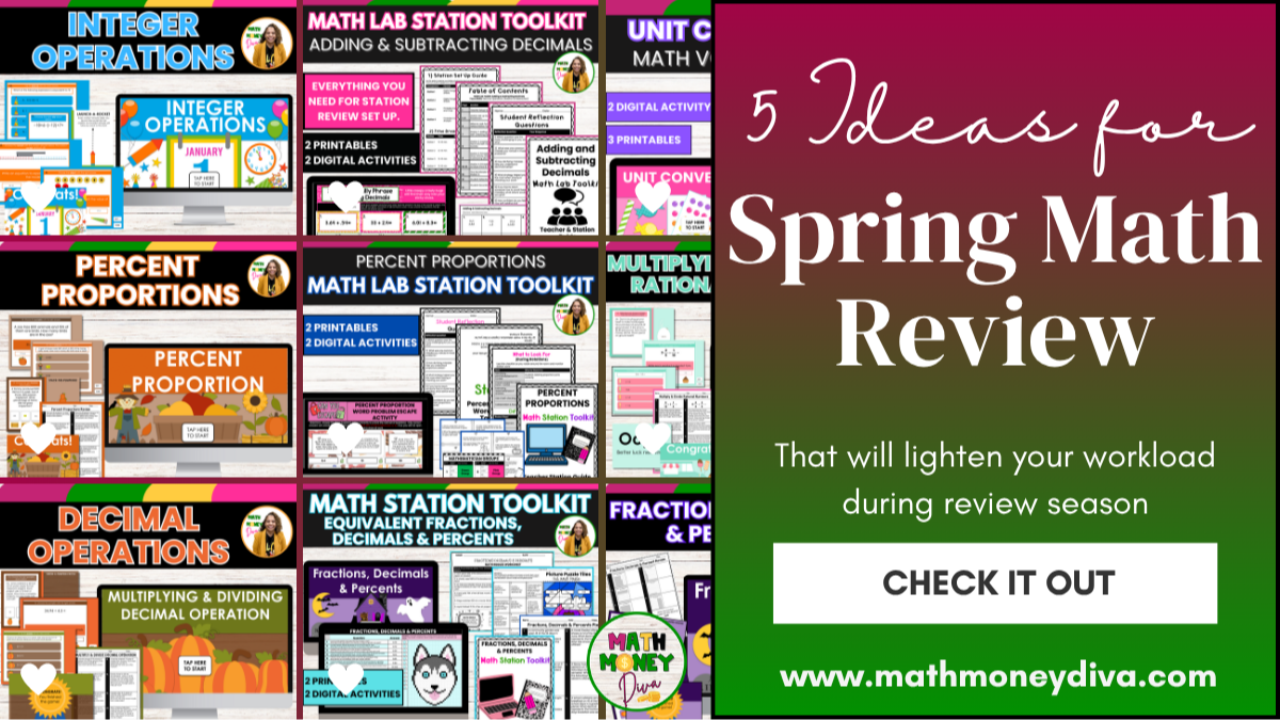
You don't need more worksheets. You need smarter systems and engaging strategies that do the heavy lifting for you. Here are five fresh ideas that make spring test review effective — without doubling your workload.
1. Run Digital Stations So You Can Finally Pull Small Groups
Whole-group reteaching when only five or six students actually need it is one of the biggest time wasters in spring test prep. Digital math stations fix that.
When students rotate through self-paced activities independently, you get your time back to pull small groups, monitor progress, and actually target the students who need you most.
Try setting up four stations focused on key skills your students are being tested on:
For example:
- Fractions and Decimal Operations
- Percent Proportions
- One-Step Equations
- Area, Volume, or Coordinate Plane
Each station can include a self-checking quiz, an interactive drag-and-drop task, a partner challenge, and a short skill refresher. Students stay busy and productive, and you stay out of survival mode.
Teacher tip: Visible timers and clear expectations for movement are what make stations successful, not just the activity itself. Structure is everything.
2. Host Review Game Days That Run Themselves
When attention spans are low and spring fever is real, interactive review games are your best friend.
Platforms like Jeopardy Labs, Blooket, and Quizizz manage classroom energy without draining yours. Students are competing, collaborating, and reviewing essential math skills, and it feels nothing like a worksheet.
The key is building a structure so the game runs itself. Clear rules, a visible timer, and defined expectations mean you're facilitating, not firefighting.
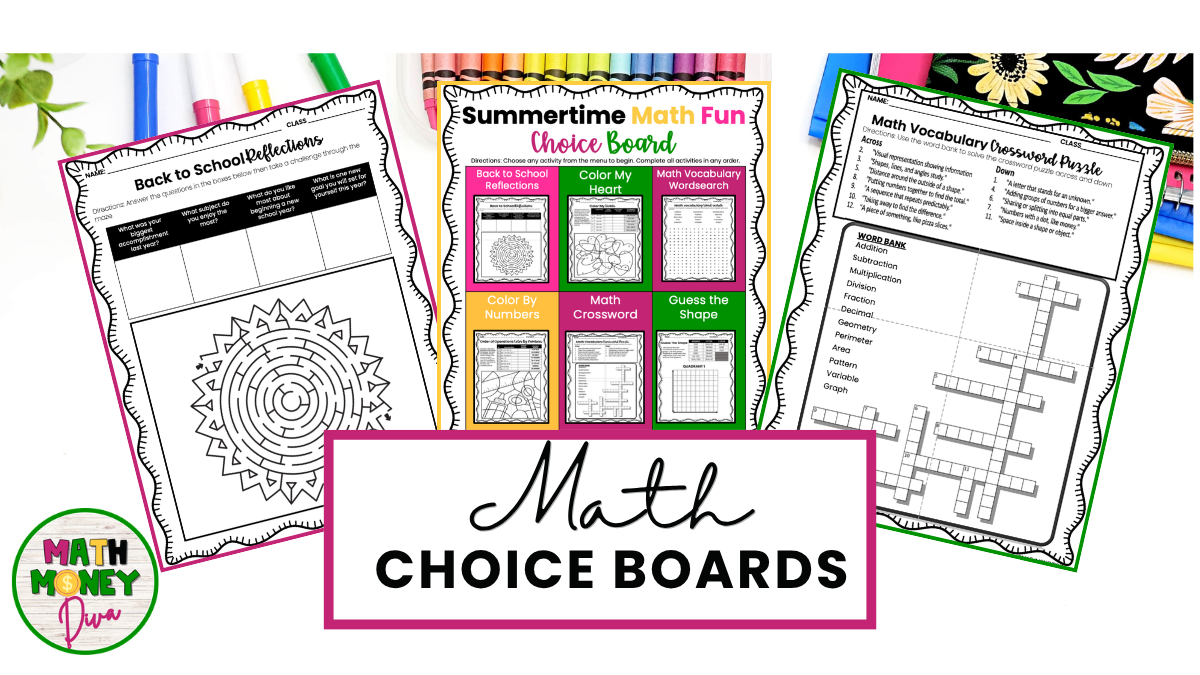
3. Use a Must-Do May-Do Choice Board
Choice boards are one of the most underrated tools in spring test prep — and they eliminate the "what do I do now?" problem completely.
Instead of assigning the same task to every student, structure your review like this:
- 3 Must-Do activities — core review skills every student needs
- 1–2 May-Do activities — enrichment or extension for students who finish early
Students stay productive, you stop micromanaging, and early finishers always have somewhere purposeful to go. If you want more early finisher ideas that work alongside choice boards, here are five engaging activities that keep middle schoolers productive.
4. Build Peer Teaching Into Your Review
Here's something most teachers underuse during test prep: their own students.
Middle schoolers often learn better from each other — especially under the pressure of test season. Explaining a concept out loud strengthens understanding in a way that silent practice never will.
Try assigning small groups one skill to master and present to the class:
- Integer operations
- Percent word problems
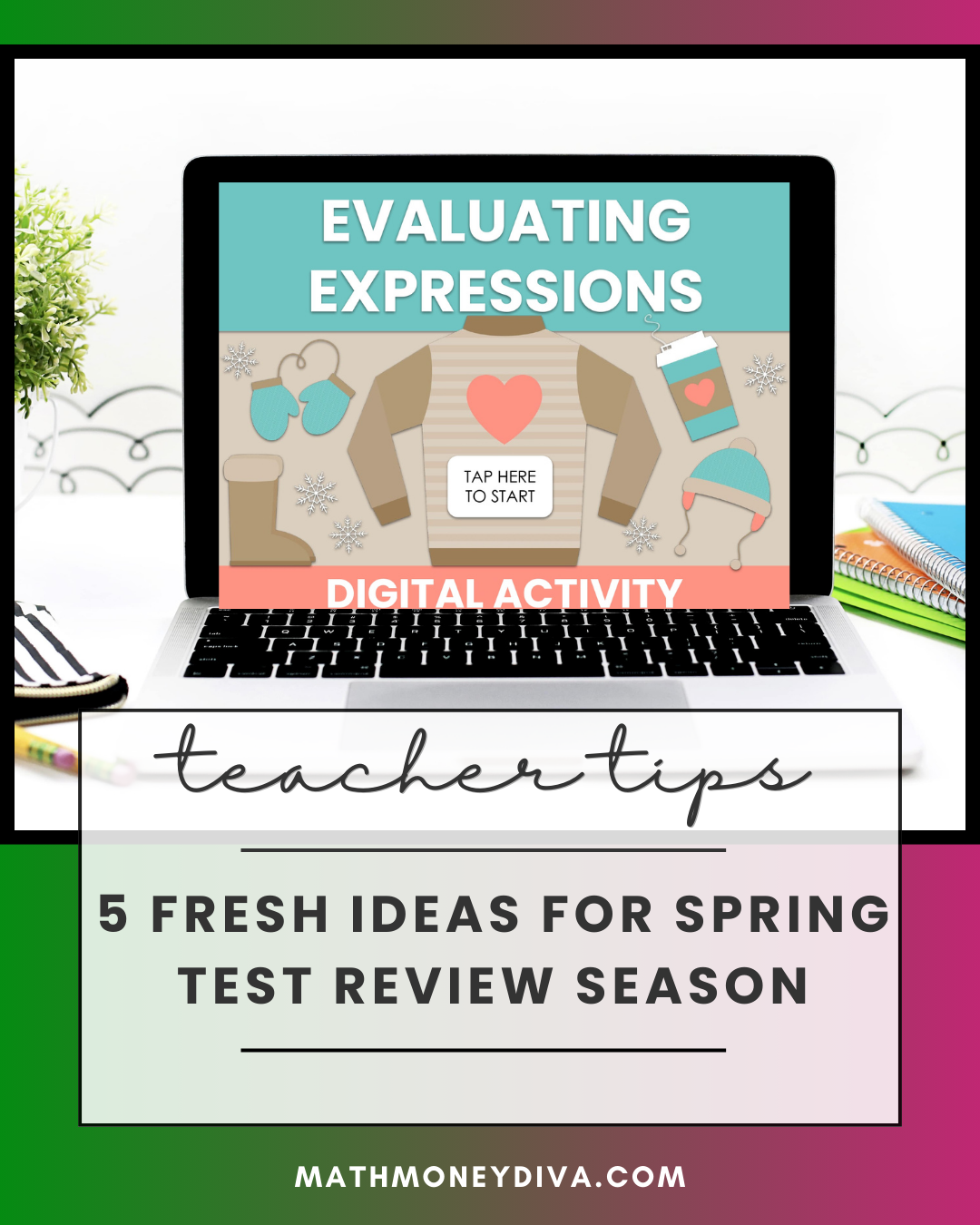
- Evaluating expressions
- Graphing on the coordinate plane
Have groups present their strategies using a whiteboard or digital slide, then add peer shout-outs at the end to reinforce effort and accuracy. Structured math talk builds confidence before testing, and it takes the pressure off you to be the only source of explanation in the room.
5. Spiral Daily Warm-Ups for Stress-Free Retention
Saving everything for one massive review packet is a recipe for burnout — yours and your students'.
Short daily spiral review prevents the need for massive reteaching sessions and keeps skills fresh without the overwhelm. Here's what that looks like in practice:
- 3 targeted review questions at the start of class
- Mixed skill practice that touches multiple standards
- Self-checking slides or quick answer discussions to close the loop
Spiraled warm-ups are one of the most effective ways to reinforce essential math standards before end-of-year assessments — and they take less than five minutes of your planning time once the system is in place.
How I Use My Spring Test Review Bundle in My Classroom
If you want a ready-to-run system that covers all five of these strategies without you building everything from scratch, here's exactly how I use my Spring Test Review Bundle in my classroom:
Whole-Class Review Days: I pull up the self-checking digital activities on the board, and we work through problems together as a class. Students get immediate feedback, and I can see exactly where misconceptions are happening in real time.
Digital Stations: I assign different activities from the bundle to different station groups. Because everything is self-checking, students rotate independently while I pull small groups.
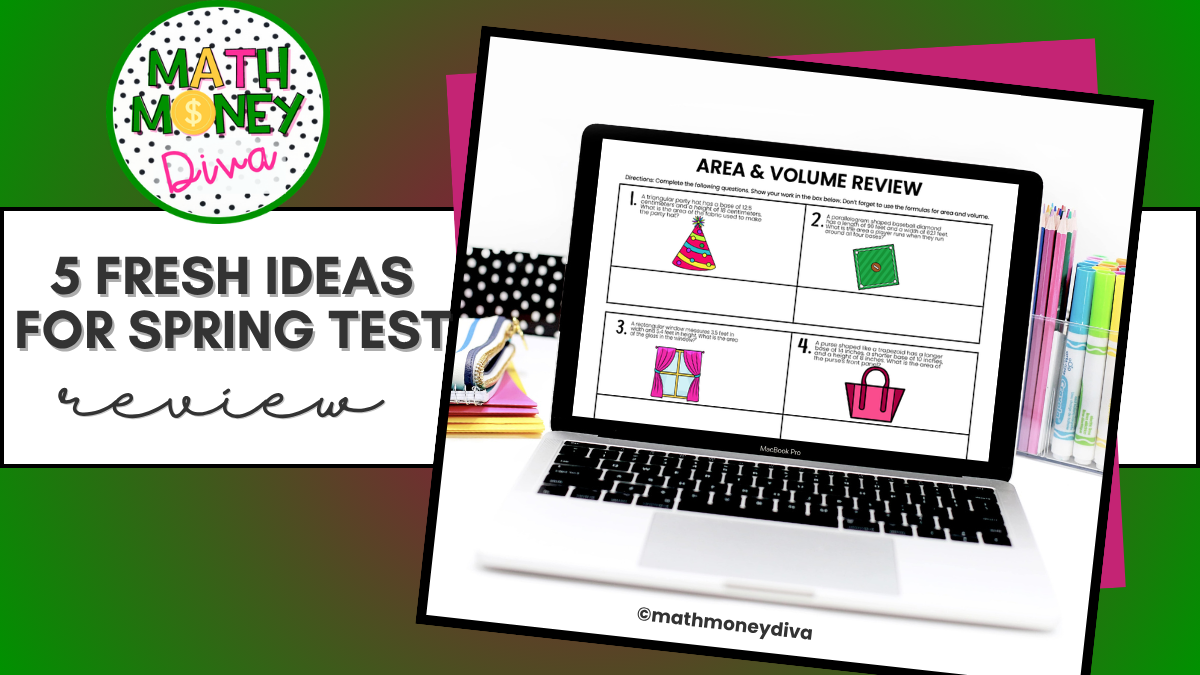
Early Finisher Option: I keep one activity from the bundle available as an ongoing early finisher option throughout the review season. Students know exactly where to go when they finish — and it's always standards-aligned, never busy work.
Homework and Independent Practice (add photo here). For students who need extra reps outside of class, I assign individual activities from the bundle as homework. The self-checking format means they get feedback without waiting for me to grade a stack of papers.
The bundle covers 12 key skills, including Ratios and Unit Rates, Percent Proportions, Fraction and Decimal Operations, One-Step Equations, Integer Operations, and more — everything your students need heading into end-of-year assessments.
Grab the Spring Test Review Bundle on TPT and have your entire review season planned before April hits.
Final Thought
Spring test review doesn't have to drain you.
With structured systems, engaging digital activities, and intentional spiraling, you can prepare students for success without burning yourself out in the process.
You don't need more stress this season. You need structure, clarity, and tools that work as hard as you do.
Don't miss a beat!
For more education tips and valuable information on classroom economy and math teaching resources, join our community!
We hate SPAM. We will never sell your information, for any reason.
Hey Teacher Friend!

